
Why Your Circuit Breaker Keeps Tripping — Causes, Risks, and How Rowbel Services Fixes It
Introduction Circuit breakers are small devices with a big job: they protect your property and everyone inside it by cutting power when an electrical problem occurs. While a single, occasional trip is a normal safety action, frequent breaker trips signal an underlying issue that shouldn’t be ignored. In this post we’ll explain why breakers trip, the risks of leaving the problem unaddressed, what a professional inspection looks like, common repairs, and why Rowbel Services is the smart choice to restore safe, reliable power to your building.
Why Breakers Trip: Common Causes
- Overloaded Circuits: The most common cause. When too many devices draw power from the same circuit, the breaker trips to prevent overheating. This is typical in older panels or areas with many high-demand appliances (AC units, space heaters, microwaves).
- Short Circuits: A direct connection between hot and neutral wires creates a surge of current that trips the breaker immediately. Short circuits often result from damaged wiring, loose connections, or malfunctioning appliances.
- Ground Faults: Similar to a short, a ground fault occurs when hot wiring contacts a grounded surface. This is common in wet areas (bathrooms, kitchens, outdoor outlets) and is particularly dangerous.
- Worn or Failing Breakers: Breakers wear out over time. A breaker that trips frequently may be failing internally and no longer protect circuits properly.
- Faulty Appliances or Equipment: A malfunctioning device can draw irregular current or create short/ground faults that force the breaker to trip.
- Improperly Sized Breaker or Panel: If breakers or wiring don’t match the electrical load or the panel is undersized for modern demand, trips will be common.
- Loose or Corroded Connections: Poor connections inside the panel or on branch circuits can generate heat and cause trips, and they also increase fire risk.
Why Frequent Trips Are a Serious Concern
- Fire Hazard: Persistent electrical faults and poor connections can produce heat and sparks, increasing the chance of electrical fires.
- Equipment Damage: Repeated electrical surges and interruptions can shorten the life of appliances and sensitive electronics.
- Operational Disruption: For businesses, frequent outages mean lost productivity, unhappy customers, and potential revenue loss.
- Safety Risks: Exposed or compromised wiring and malfunctioning breakers can put occupants at risk of shock or injury.
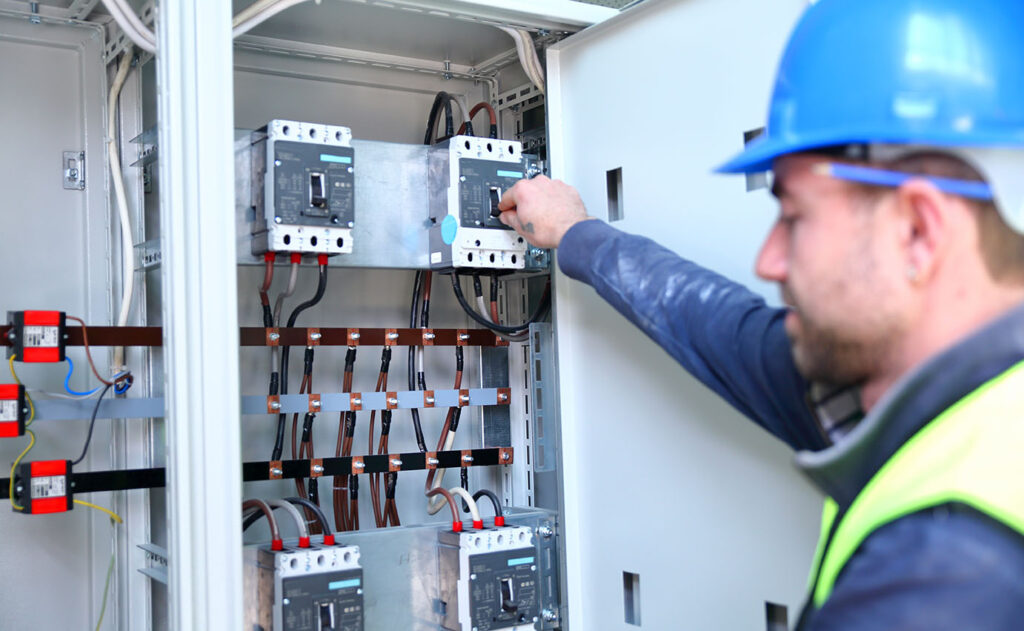
What a Professional Inspection Involves When you call Rowbel Services for a circuit-breaker inspection, our certified technicians follow a systematic process:
- Initial Assessment: We listen to the symptoms (which breakers trip, when, and what appliances were in use) and review the building’s electrical history.
- Visual Panel Inspection: We inspect the panel for signs of corrosion, overheating, loose connections, water damage, labeling accuracy, and code compliance.
- Load Testing and Circuit Tracing: We measure current draw on circuits to identify overloads and trace branches to determine cause and load distribution.
- Appliance and Outlet Testing: We test suspect appliances and outlets for faults, shorts, or ground-fault sources.
- Breaker Evaluation: We test breakers for proper function and replace any that are worn or defective.
- Comprehensive Report & Recommendations: We provide a clear, prioritized plan — from short fixes to upgrades — with transparent cost estimates.
Common Repairs and Upgrades
- Breaker replacement or upgrading to higher-quality breakers
- Balancing loads across circuits or adding new dedicated circuits for high-demand equipment
- Replacing damaged wiring, outlets, or switches
- Installing ground-fault circuit interrupters (GFCIs) in wet areas
- Upgrading the electrical panel to accommodate modern loads and safety features
- Tightening and securing loose connections, replacing corroded components
- Whole-home or whole-building surge protection
Why Choose Rowbel Services
- Experienced, licensed electricians trained in residential and commercial systems
- Safety-first approach with code-compliant repairs and quality parts
- Transparent diagnostics and pricing — you get a clear plan before we start work
- Fast response for urgent issues and scheduled inspections for routine maintenance
- Proven track record helping property owners reduce risk, downtime, and repair costs over time
Preventive Tips to Reduce Breaker Trips
- Distribute high-draw appliances across multiple circuits
- Avoid running multiple heavy-load devices on the same circuit
- Schedule periodic electrical inspections, especially for older buildings
- Replace aging breakers and panels before failure becomes a hazard
- Use GFCIs and AFCIs where required for added protection
- Keep records of past electrical work and panel labeling for faster troubleshooting
Frequently Asked Questions Q: Is it safe to keep resetting the breaker? A: No. Repeatedly resetting a breaker without addressing the cause can hide a dangerous condition and increase fire risk. Call a professional if trips persist.
Q: Can I replace a breaker myself? A: Replacing breakers and working inside electrical panels is hazardous and typically requires a licensed electrician. Improper work can cause shock, fire, or code violations.
Q: How long does an inspection and repair take? A: A basic inspection can take 30–90 minutes. Repairs vary from quick fixes (tightening connections, replacing a breaker) to panel upgrades that may take a day or more.
Call to Action If breaker trips are disrupting your home or business, don’t wait. Contact Rowbel Services for a comprehensive inspection and reliable repairs tailored to your needs. Our team will diagnose the issue, explain your options, and restore safe, reliable power so you can focus on what matters.
Contact Rowbel Services today to schedule an inspection or emergency service. Keep your property, equipment, and people safe with professional electrical care.
#ElectricalSafety #BreakerTrips #RowbelServices #ElectricalMaintenance #CommercialElectrician #StaySafe