
Understanding the Composition of a Low‑Voltage Power Distribution System — A Practical Guide (and How Rowbel Can Help)
Introduction Low‑voltage (LV) power distribution systems form the backbone of electrical supply within buildings, industrial facilities, and many commercial sites. While often out of sight, the design, installation, and maintenance of LV distribution directly affect safety, reliability, and operational efficiency. In this post we’ll break down the typical components of an LV distribution system, explain their roles, and show how Rowbel supports each stage — from design to commissioning and through the asset’s lifecycle.
Core Components of an LV Power Distribution System
Main Incoming Supply The main incoming supply is the point where utility power enters a facility. Incoming options vary (single‑phase, three‑phase, different voltages), and understanding the supplied capacity and characteristics is the first step in any LV project. Proper metering and isolation at this point allow for safe operation and accurate billing.
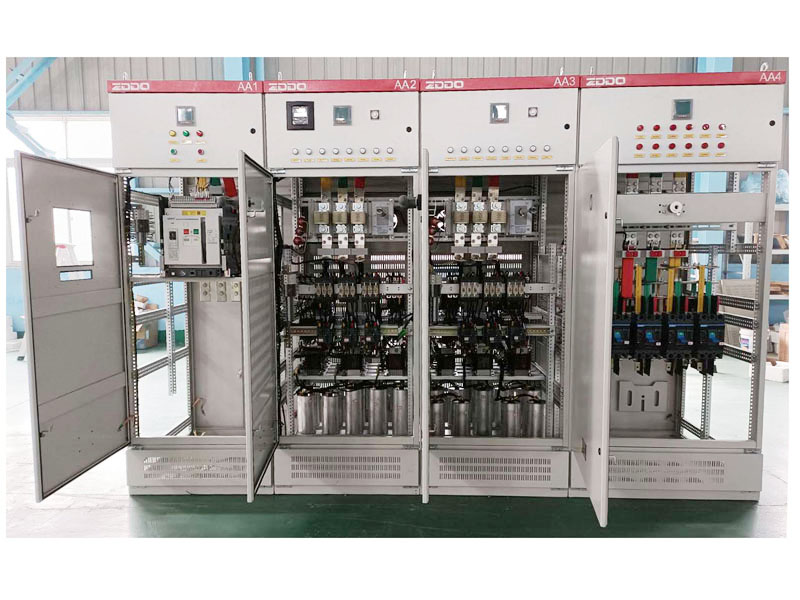
Main Distribution Board (MDB) The MDB is the central hub that receives the incoming supply and distributes it to downstream systems. It houses main switches, protection devices, busbars, and metering instruments. A correctly sized and configured MDB ensures balanced load distribution and provides clear, secure isolation for maintenance.
Sub‑Distribution Boards (SDBs) SDBs segment power distribution into zones, floors, or specific loads (HVAC, lighting, motors). They reduce cabling complexity, improve fault localization, and allow modular control. Each SDB typically includes circuit breakers, local metering, and labeling for easy identification.
Protective Devices (MCBs, MCCBs, RCDs) Protection devices are essential to prevent overloads, short circuits, and earth faults. Miniature Circuit Breakers (MCBs) protect low current circuits; Molded Case Circuit Breakers (MCCBs) handle higher currents and adjustable trip settings; Residual Current Devices (RCDs) protect against earth leakage and shock. Correctly selecting and coordinating these devices minimizes nuisance trips while ensuring safety.
Feeders and Branch Circuits Feeders are the main conductors connecting distribution boards and major loads. Branch circuits serve individual equipment and outlets. Proper conductor sizing, insulation selection, routing, and derating for temperature or grouping are critical to prevent overheating and voltage drop.
Transformers (Where Required) In some systems, transformers step voltage up or down between distribution levels (e.g., 11kV to 415V or 415V to specialized lower voltages). Transformers must be sized for load, harmonics, and inrush current, and sited for ventilation and access.
Metering Accurate metering at incoming and sub‑points enables energy management, cost allocation, and demand control. Modern systems often employ smart meters and power quality monitors to track consumption, detect imbalances, and identify inefficiencies.
Earthing/Grounding A reliable earth system is fundamental for safety and equipment protection. Earthing prevents dangerous touch voltages, ensures correct operation of protective devices, and provides a reference point for system voltages. Earthing design must consider soil resistivity, earthing electrode configuration, bonding, and equipotential practices.
Surge Protection Transient overvoltages from lightning or switching events can severely damage equipment. Surge Protective Devices (SPDs) installed at the incoming supply and critical panels protect sensitive electronics and minimize downtime.
Cable Routing, Management, and Labeling Neat cable routing, use of trunking/conduits, clear labeling, and segregation of power and control/signal cabling improve maintainability and safety. Fire-stopping measures and cable derating considerations should be part of routing decisions.
Documentation and Safety Signage Single‑line diagrams, panel schedules, test certificates, operation manuals, and safety signage are essential deliverables that support safe operation, maintenance, and future expansion.
How Rowbel Supports Every Stage
System Design & Load Calculations Rowbel provides comprehensive system design — including single‑line diagrams, load flow calculations, fault level analysis, and protection coordination. We size switchgear, conductors, and protection devices to meet current needs and future growth, ensuring code compliance and operational efficiency.
Supply & Installation Rowbel supplies high-quality MDBs, SDBs, breakers, panels, transformers, cables, meters, and surge/earthing equipment. Our installation teams follow industry best practices for cable routing, segregation, and labeling, delivering tidy, serviceable installations.
Protective Coordination & Earthing Implementation We perform protective device coordination studies and implement earthing systems tailored to site conditions. Our approach minimizes nuisance tripping while ensuring rapid isolation during faults and robust protection against touch voltages.
Lightning & Surge Mitigation Rowbel specifies and installs SPDs and grounding enhancements to mitigate lightning and switching surges. We integrate layered protection strategies (primary, secondary, tertiary SPDs) to protect critical loads and sensitive electronics.
Testing, Commissioning & Documentation Before handover, Rowbel conducts comprehensive testing and commissioning — insulation resistance tests, polarity checks, earth loop impedance, protective relay testing, power quality assessments, and functional verification. We provide full test reports, as‑built drawings, and operation manuals.
Maintenance, Troubleshooting & Upgrades Post‑installation, Rowbel offers preventive maintenance programs, condition monitoring, and rapid troubleshooting. We can upgrade panels, add metering, implement energy‑efficiency improvements, and support load growth with minimal disruption.
Compliance & Safety Audits Rowbel helps ensure installations meet local regulations and international standards. We perform safety audits, remedial works, and support certification and inspection processes.
Conclusion A well‑designed and maintained LV power distribution system is essential for safety, continuity, and operational efficiency. From the incoming supply to final branch circuits, each component has a specific role that, when integrated properly, yields a resilient and manageable electrical system. Rowbel offers end‑to‑end services — design, supply, installation, testing, maintenance, and compliance — so clients can rely on safe, efficient, and future‑ready LV distribution infrastructure.
Hashtags & Tags #LowVoltage #PowerDistribution #ElectricalSafety #Rowbel #EnergyEfficiency #ElectricalEngineering #Installation #Maintenance ⚡🔧📋